
High Court rules that Kingdom of Saudi Arabia should compensate UK based victim of Pegasus spyware
The High Court has today ruled that the Kingdom of Saudi Arabia (KSA) should compensate a UK based former citizen and human rights activist Ghanem Al-Masarir with more than £3million after it infected his mobile phone with the spyware known as Pegasus.
Posted on 26 January 2026
Ruling on a claim first brought before the High Court in 2019, a judge held that Ghanem could rely on expert evidence for compensation for the psychiatric harm he has suffered since he discovered in 2018 that his iPhones had been hacked. The Court also accepted that Ghanem is entitled to compensation for a physical attack he suffered on 31 August 2018 outside Harrods which he believes was directed by the Saudi regime.
It also awarded Ghanem’s costs of the action to be paid by KSA.
Total damages awarded by the court are £3,025,662.83.
The judge accepted that the actions of KSA towards Ghanem had been “grossly intrusive” and without justification.
The Court accepted that the Saudi regime infected Ghanem’s mobile phone with the spyware, known as Pegasus, acquired from the Israeli tech company, NSO Group. It allows for the extraction and ongoing collection of all data stored on or by an infected device; location tracking of the device; interception and recording of voice calls on the device; real-time interception and recording of sounds; and interception and recording of images in the vicinity of the device.
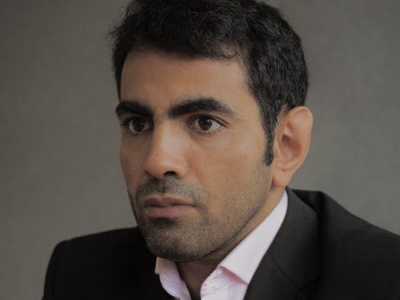
Ghanem, who lives in London, is a satirist who shared his views on human rights and political issues through his YouTube channels, the Ghanem Show and Ghanem Al-Masarir, which attracted more than 345 million views. He has lived in England since 2003 and has been prominently involved in campaigning for political reform and human rights in Saudi Arabia. He was granted asylum in October 2018.
It was established that his mobile devices had been infected with Pegasus spyware after they were examined by the Citizen Lab in 2018.
In a hearing last week, the High Court heard that the infection and the physical attack have had a catastrophic effect on Ghanem’s life. Seven years later he continues to suffer from severe depression and his once thriving career has ended. He is unable to work at all or to perform many basic day-to-day activities, and rarely leaves the house.
Represented by law firm Leigh Day, Ghanem applied for a judgment on the whole of his claim, for an award of costs and damages.
In the years since Ghanem first applied for permission to bring his claim in the UK, KSA had argued that it had immunity against the claim under the State Immunity Act 1978. In 2022 the court ruled KSA did not have such immunity and that Ghanem had provided enough evidence to conclude, on the balance of probabilities, that KSA was responsible for the persons responsible for the alleged spyware as well as the alleged assault.
In 2024 the court struck out an appeal by KSA after the state failed to pay into court the sum of £210,000.
In his judgment given on 26 January, Mr Justice Saini said
“..I am satisfied that it was as a result of his public statements about the Saudi government, that the Claimant was subject to various acts of intimidation between 2015 and 2019…I infer that the KSA and/or its agents were responsible for these various acts of intimidation.”
“In my judgment, there is a compelling basis for concluding that the Claimant’s iPhones were hacked by Pegasus spyware which resulted in the exfiltration of data from those mobile phones and that this conduct was directed or authorised by the KSA or agents acting on its behalf.”
“The KSA had a clear interest in and motivation to shut down the Claimant’s public criticism of the Saudi government."
“No justification has been advanced for this grossly intrusive conduct, nor could there be. The Claimant’s activities as an online activist in support of human rights in Saudi Arabia and in opposition to the Saudi government represented a proper exercise of his free speech rights, protected by Article 10 ECHR. They could not possibly justify the hacking and surveillance. It follows that there is no real prospect of the KSA successfully defending the claim in misuse of personal information.”
Ghanem Al-Masarir, said following the judgment:
"Today's ruling brings a long and painful chapter to a close. It affirms that standing up for the truth, no matter how powerful the opponent, is worth the struggle. No amount of money can undo what I have suffered, but I hope the Kingdom of Saudi Arabia will now do the right thing and comply with this judgment without the need for further enforcement action."
Sapna Malik, partner at Leigh Day, said:
“Today’s judgment vindicates our client for seeking to hold the KSA to account. The grossly intrusive conduct, by which huge amounts of our client’s data and information on every aspect of his life were secretly transmitted to it, has had a profound and long lasting impact on him. We hope that the KSA will now promptly pay the compensation awarded to our client so that he may move forward with his life.”
High Court gives green light to a Pegasus spyware case being brought in London against the Kingdom of Saudi Arabia by a UK based dissident
The High Court has today ruled the KSA does not have immunity under the State Immunity Act 1978 in relation to a case brought against it by satirist and human rights activist Ghanem Al-Masarir for its alleged use of spyware to infiltrate his mobile phones.

Sapna Malik
Sapna is co-head of the international department.