

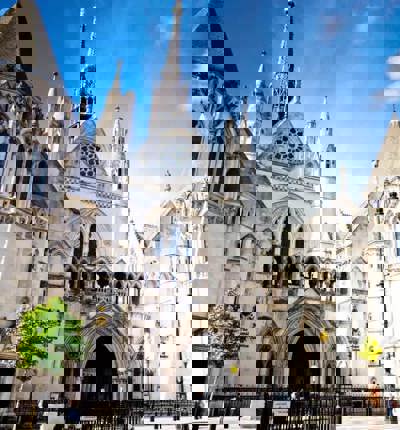
Quakers apply to intervene in judicial review of Palestine Action proscription
Quakers in Britain (QiB) has applied to intervene in the judicial review of the proscription of Palestine Action as a terrorist organisation, saying the ban has undermined the Quakers’ freedom of religion.
Posted on 08 September 2025
QiB, the national organisation of Quakers living in Britain is concerned that the proscription and its enforcement may mean legitimate acts of protest are seen as a serious criminal offence.
On 1 July 2025, Palestine Action was proscribed as a terrorist organisation, making it a criminal offence to be a member or to invite or recklessly express support for the group.
The High Court granted Palestine Action a judicial review on 30 July 2025, which allows the group to challenge the lawfulness of its proscription.
Mr Justice Chamberlain agreed that there were reasonable grounds to challenge the proscription under Articles 6, 10, 11 and 14 of the European Convention on Human Rights which protect the rights to a fair trial, freedom of expression and freedom of assembly.
Quakers in Britain has applied to intervene in the judicial review and has instructed lawyers from the human rights team at Leigh Day.
In its grounds for application to intervene with evidence, Quakers in Britain says it is seeking to draw the court’s attention to four matters:
- The impact of the proscription order on the Quakers’ “absolute right” to freedom of thought, conscience, and religion, freedoms to be enjoyed without discrimination on any ground including religion, political or other opinion. Articles 9 and 14 of the Human Rights Act protect those freedoms and QIB is fearful of potential sanctions for manifesting its faith through taking meaningful action for peace in Gaza.
- The impact of the order on the exchange of ideas
- The importance of this exchange of ideas to a functioning democracy
- Similar legal powers in other jurisdictions, and how these have been used and regulated by the relevant courts.
Quakers in Britain is represented by Leigh Day partner and joint head of human rights, Jamie Beagent and solicitor, Ellie Fawcett who have instructed Sam Fowles at 39 Essex Chambers.
Paul Parker, recording clerk for Quakers in Britain said:
“We hope our intervention would assist the court by ensuring that it has our relevant evidence about the effect the proscription has had on our church.”
Leigh Day solicitor, Ellie Fawcett said:
“Our clients hope that their intervention, highlighting the potential impact of the proscription, will be helpful to the court in considering the judicial review claim.”
Sam Fowles, Chiara Cordone and Celia Reynolds from 39 Essex Chambers are instructed as counsel.
Related Content
Judicial review and public body decision making

Jamie Beagent
Joint head of the human rights department specialising in judicial review and public law.

Ellie Fawcett
Ellie is an Associate Solicitor in the human rights department