

Recent food allergy law changes: what Benedict’s Law, Natasha’s Law and Owen’s Law mean
Posted on 01 October 2026
Food allergy deaths are preventable, yet they continue to occur. In recent years, important legal changes have been introduced to improve allergy safety in schools, retail and hospitality. This blog explains recent food allergy law changes in the UK, including Benedict’s Law, Natasha’s Law and the proposed Owen’s Law, and what they mean for schools, venues, employers and consumers.
Leigh Day is proud to have supported a number of families in pursuing accountability and reform following these tragedies. However, the current legal framework remains fragmented, with important protections still depending on where food is served and in what setting.
Three legal developments help show both the progress that has been made and the gaps that still remain.
Benedict’s Law
Why Benedict’s Law matters: what the inquest found
Michelle Victor, Leigh Day Partner and Head of the Food Safety Team, represented the family of five-year-old Benedict Blythe at a jury inquest into his death at Peterborough Coroner’s Court. The inquest in July 2025 concluded that Benedict died from accidental exposure to cow’s milk protein, causing fatal anaphylaxis.
The inquest revealed multiple factors contributed to his death, including the:
- Breakdown of agreed allergy management processes, leading to increased risk of cross‑contamination between dairy-free milk with lactose-free (containing dairy) milk;
-
Delayed administration of adrenaline, by which point Benedict was already in cardiac arrest;
-
Lack of staff awareness and training, causing late recognition of symptoms;
-
Failure to follow Benedict’s allergy plan provided to the school by his family, which had not been adequately shared with staff;
-
Missed opportunities to review and improve safety procedures, including after a previous incident in school whereby Benedict had suffered an allergic reaction.
The findings highlighted systemic weaknesses that Benedict’s Law seeks to address.
In September 2026, new statutory guidance was published on allergy safety in schools - introduced under the Children’s Wellbeing and Schools Act 2026.
Benedict’s Law has now come into effect in all schools in England. Its core pillars are:
1. Mandatory allergy policies in every school
- Schools must have a clear, published, whole‑school allergy policy
- This includes procedures for prevention, communication, and emergency response
2. Compulsory training for all staff
- All school staff must be trained to recognise allergic reactions and respond to anaphylaxis
- Training includes how to use adrenaline auto‑injectors (e.g. EpiPens)
3. Access to life‑saving emergency medication
- Schools must hold spare adrenaline auto‑injectors on site for emergency use
- Ensures immediate response even where a child has no prior diagnosis
These three pillars are designed to work together to create a consistent, national framework so every school is properly prepared to prevent and respond to life‑threatening allergic reactions.
Natasha’s Law
Natasha’s Law, which came into force in October 2021, marked a major milestone for protecting allergy sufferers.
The law followed the death of Natasha Ednan-Laperouse in 2016 after she consumed a Pret A Manger baguette containing undeclared sesame seeds - an allergen to which she was severely allergic. At the time, the law allowed food prepared and packaged on-site (PPDS food) to be sold without full ingredient labelling, creating a critical loophole: products made on-site (e.g. sandwiches in a shop) did not require full labelling but equivalent products made off-site in factories did.
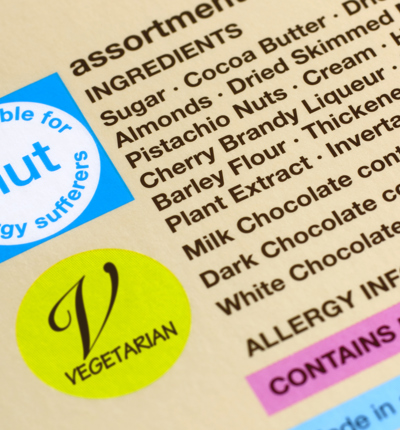
Natasha’s Law introduced a legal requirement for full ingredient lists with clearly emphasised allergens on all prepacked foods for direct sale. Consumers can now make more informed decisions when purchasing prepacked food.
Leigh Day represented Natasha’s family at the inquest, where the coroner raised serious concerns about the regulatory framework in place at the time. Those concerns ultimately helped drive the legal reform that became Natasha’s Law.
Owen’s Law
Despite important developments in allergy prevention and safety, campaigners are concerned that serious gaps remain, particularly in the hospitality sector.
Owen’s Law is a campaign for further reform, led by the family of Owen Carey, who died in 2017 after suffering a fatal allergic reaction at a London restaurant.
His death exposed a critical weakness in the current system: the reliance on verbal communication of allergen information, which is vulnerable to human error.
What does Owen’s Law endeavour to change?
Owen’s Law calls for legislation requiring:
-
Written allergen information on menus in all restaurants and food outlets
-
Clear and consistent allergen labelling for non-prepacked food
-
Reduced reliance on verbal assurances from staff
At present, UK law still allows allergen information for restaurant food to be provided verbally, creating ongoing risk—particularly in fast-paced hospitality environments.
As of September 2026, Owen’s Law has not yet been enacted, but it is supported in principle by the Food Standards Agency and remains under active consideration.
What do these changes mean in practice?
For schools
Benedict’s Law introduces clearer legal duties around allergy training, spare adrenaline auto-injectors, individual healthcare plans and school-wide allergy policies. This should help reduce inconsistency and improve pupil safety. However, it is important that any training provided to the school staff is effective and will enable them to recognise the early signs of anaphylaxis and respond quickly.
To make the training effective, Benedict’s family say schools should go beyond online training modules by incorporating practical emergency drills, regular refresher sessions, competency assessments and robust reporting of incidents and near misses. They believe that allergy safety should be embedded within the culture of a school, not simply evidenced on paper.
For restaurants and venues
Natasha’s Law improved allergen information for prepacked food for direct sale, but gaps remain for non-prepacked food sold in restaurants, cafés and other hospitality settings. Owen’s Law is intended to address some of those remaining risks by reducing reliance on verbal communication.
For employers
Employers, particularly those operating canteens, events or other food services, should be aware that expectations around allergy management and allergen communication are continuing to evolve. Clear systems, staff training and accurate information remain essential.
For consumers and families
These legal changes improve protection, but they do not yet create a fully consistent system. Consumers and families may still encounter different standards depending on whether food is provided in a school, a sandwich shop or a restaurant.
Why current food allergy laws still leave gaps
Food allergies require consistent, robust and enforceable protections. Benedict’s Law, Natasha’s Law and the proposed Owen’s Law each represent important progress, but they apply in different settings and do not yet create a unified system of protection.
As a result, allergy safety still depends too heavily on where food is served, how it is labelled and whether staff have the right training and information. A more consistent legal framework is needed to better protect children, families, workers and consumers, and to help prevent further avoidable deaths.
Further information and support
You can also read more about our work supporting families affected by serious allergic reactions and failures in food safety and allergen management.

Food safety - Natasha's story
Natasha died after eating a sandwich baguette from Pret a Manger and suffering an allergic reaction while on a British Airways flight, her parents' legal fight led to 'Natasha's law' which changed food labelling laws

An allergen at school and delayed administration of adrenaline probably contributed to the death of Benedict Blythe
A jury has concluded that five-year-old Benedict Blythe, from Stamford, died following an accidental exposure to his allergen in school.

Food Safety - Owen's story
Owen Carey tragically died following an anaphylactic reaction after eating a chicken burger which had been marinated in buttermilk.