

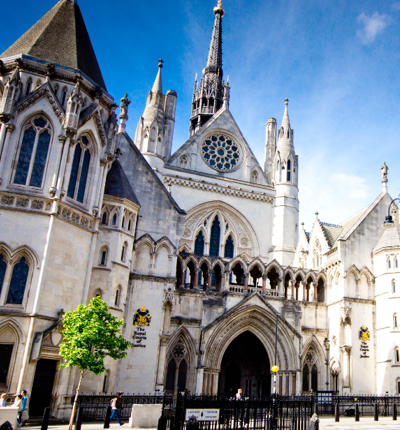
South African workers win right to have bullying and unfair dismissal case against UK-based insurance company heard at High Court in London
The case represents a landmark type of claim against multinational companies who seek to evade local labour laws by restructuring their business.
Posted on 19 November 2026
A group of South African insurance workers have been granted permission to have their legal claim heard at the High Court in London over accusations they were bullied and unfairly dismissed for complaining about their working conditions by UK-based multinational insurance company Business Insurance Solutions Limited (BISL) and its former chairman, Australian businessman Paul Steffens.
The 30 call centre workers were employed by South African company Connectaquote, which was set up in 2011 when BISL and its then-chairman Mr Steffens outsourced its telesales business from the UK. The workers allege that in 2023 changes were made to their working conditions without any consultation by BISL and Mr Steffens.
After they asserted their labour rights by complaining and later filing claims with South Africa’s labour authority, they allege they were bullied by Mr Steffens in aggressive phone calls during which he described them as “terrorists” and threatened to sack them and bankrupt the company. Weeks later, Connectaquote was placed into liquidation.
It's claimed other Connectaquote workers who did not file a claim over the issue were subsequently re-hired by a new company set up by BISL and Mr Steffens.
On a two-day hearing at the High Court in July, BISL and Mr Steffens argued that the claim should not be heard in England as there was not a sufficient connection to the UK. The Court rejected their challenge and ruled that the case should proceed in the High Court in London. BISL and Mr Steffens also argued that since the claimants would have access to justice in South Africa, the claim should be heard there.
The workers argued that, although they lived and worked in South Africa, the case concerned alleged wrongdoing by a UK-based company and decisions made in England, with much of the key evidence and many of the relevant witnesses also based in the UK.
Deputy High Court Judge Karen Ridge KC found that BISL failed to show that South Africa was a more appropriate place for the claim against the company to be heard – ruling that England was the appropriate place for the claim against Mr Steffens.
The judge also found that the “centre of gravity” of the dispute pointed towards England, noting that the central issue in the claim concerns the alleged control exercised by BISL over the South African company and the role allegedly played by Mr Steffens.
The claimants also argued that there was a real risk they would be unable to obtain substantial justice if the claim had to be brought in South Africa. Given the complexity of the case, which includes allegations of conspiracy against two foreign defendants with no presence in South Africa, they argued that they would face serious difficulties finding lawyers able and willing to take on the claim.
In her finding, the judge considered the potential “inequality of arms” if the claimants were unable to secure legal representation in South Africa and had to represent themselves. The judge observed that claimants representing themselves would find it “extremely difficult” to navigate the complex issues in the case.
Importantly, the judge concluded that, even if South Africa had otherwise been the appropriate place for the claim to be heard, there was a real risk the claimants would not be able to obtain substantial justice there.
Other allegations detailed in the workers’ claim include attempts by BISL to substantially reduce workers’ earnings and clawback practices where pay was taken from them, even after they had been paid, for circumstances out of their control, as well as discriminatory and deeply offensive conduct.
BISL – which trades under the names of several insurance brands including InsuranceLine Direct, WeCompare Direct, and Car Line Direct – and Mr Steffens deny the allegations against them and say they are not liable for any of the workers’ claims. BISL is regulated by the Financial Conduct Authority.
The workers, who are seeking compensation for past and future lost earnings and damages for discrimination, are represented by partner Daniel Leader, and solicitors Alex Wessely and Ana Rizelo, at law firm Leigh Day.
Leigh Day’s Alex Wessely said:
"Our clients’ case is that the decisions to unilaterally cut their pay and ultimately to shut down the company to avoid South African labour law were made by a UK-based company and its chairman, and it is entirely correct they should be able to seek justice at the High Court in London.
“The workers believe that multinational businesses that outsource to places like South Africa should not be able to avoid being held accountable for alleged violations of labour laws in the places they operate."
One ex-worker, who did not wish to be named, said:
“My fellow workers and I worked long, often anti-social hours so our families could have better lives – only to have everything taken away from us when Connectaquote was shut down without warning.”
"We now hope to achieve justice at the High Court in London after losing our jobs and having our livelihoods affected in such a significant way.”

Daniel Leader
International human rights, business human rights and corporate accountability lawyer

Alex Wessely
Alex Wessely is a senior associate solicitor in the international department.
Ana Rizelo
Ana is a solicitor in the international department