Understanding the impact of follow up care for age-related eye problems
Cardiff based lawyer Amy Downey considers the importance of speedy follow-up care for people with age-related eye and vision problems, and the potential issues faced by patients when delays happen.
Posted on 13 January 2026
Age-related macular degeneration (AMD) is the top cause of vision loss in the UK. AMD is described by the Macular Society as "a progressive eye condition that affects the central part of the retina known as the macular."
There are two types of AMD; dry-AMD, which is unfortunately incurable, and wet-AMD (W-AMD), which can be treated.
How should wet-AMD be treated?
Early treatment is vital to slow the progression of wet-AMD and the subsequent vision loss. NICE Guidance says that treatment should begin within two weeks of referral to an eye specialist.
If treatment is not started within 14 days, someone with wet-AMD can experience permanent vision loss. Therefore, it is vital that eye clinics and eye hospitals have a robust process in place to ensure those with wet-AMD are diagnosed, referred and treated urgently.
The exact process may vary slightly depending on your location, but should broadly follow the same pathway, in line with NICE guidance.
In Cardiff, patients with wet-AMD are referred to the Cardiff and Vale Ophthalmology department to start their treatment, which often involves injections into the eyes. Those with possible wet-AMD are referred to the Cardiff and Vale Ophthalmology department for diagnostic optical coherence tomography scans (OCT scans).
This treatment can be very successful. In fact, the injections are known to have prevented deterioration of eyesight in up to 90% of patients and around 30% of patients have experienced a reversal of vision loss. Left untreated, patients with wet-AMD can experience significant vision impairment.
There are two stages to care –
- Nurse led appointment for an injection and a scan
- Consultant virtual review of the scan – decision to discharge or continue treatment
It’s vital that those in need of further treatment receive timely follow-up care.
It’s essential for healthcare providers to have solid processes in place to ensure that patients’ notes and scan results are reviewed in a timely manner. When that doesn’t happen, a backlog may occur, meaning that patients are left waiting for follow-up care.
What help is available for people impacted by delays to treat wet-AMD?
Leigh Day’s Cardiff medical negligence team are supporting patients in the area whose treatment was delayed and whose eyesight has been impacted as a result. Anyone concerned that their, or a loved one’s vision loss could have been prevented can get in touch for a free, confidential consultation.
Get help today
Fill in our short form and we will call you back, or call us on 02920 027 710

Amy Downey
Amy is an associate in the medical negligence department.
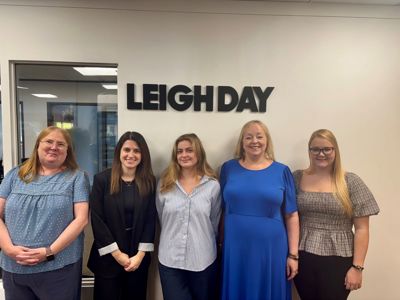
Leigh Day strengthens Cardiff office with two new clinical negligence lawyers
Leigh Day has expanded its Cardiff office with the appointment of two clinical negligence lawyers, Wallis Crockford and Amy Downey, who bring significant experience to the firm as it continues to grow its presence in Wales.