

Inquest into death of 14-year-old boy shot dead in London gang violence concludes that failings by the agencies responsible for supporting him may have contributed to his death
An inquest into the death of Corey Junior Davis found that failings by the police, youth offending teams, mental health and housing providers may have contributed to his death after he was fatally shot in a gang-related incident.
Posted on 24 July 2026
Recording unlawful killing, HM Senior Coroner Graeme Irvine concluded that failings which were admitted by the Metropolitan Police, the London Borough of Newham and London & Quadrant Housing Trust (L&Q), possibly contributed to Corey Junior Davis’s death.
Corey Junior (known as CJ) was shot and killed in a drive-by shooting in Newham on 4 September 2017 whilst in a playground in Moore Walk, Forest Gate.
The inquest heard evidence over the course of five days from the Metropolitan Police, the London Borough of Newham and London & Quadrant Housing Trust (L&Q), examining what support and protection was provided to CJ before his death.
The coroner had previously ruled that the inquest would be heard as an Article 2 inquest, requiring the inquest to consider whether the authorities took reasonable steps to protect CJ’s life.
The inquest heard evidence about the difficulties CJ experienced following his move to secondary school after being diagnosed with ADHD. Giving evidence, CJ's mother Keisha McLeod said that although he had flourished with support at primary school, she believed that appropriate adjustments and pastoral support fell away following his move to Forest Gate Community School. She told the inquest that activities he loved, including football and science club, were removed as disciplinary sanctions linked to behaviour associated with his ADHD, which she believed caused his confidence to deteriorate.
The inquest heard evidence that Keisha became concerned her son was being criminally exploited. Keisha described becoming aware that CJ had been approached to sell drugs after older youths initially befriended him by buying him food and drinks. The inquest heard that CJ’ s family arranged for him to move out of Newham and live with relatives in south London because of their concerns about his safety. He subsequently received home tuition while efforts were made to protect him.

Keisha told the inquest she repeatedly raised safeguarding concerns with professionals, telling agencies that she believed her son was at serious risk. The inquest heard about her requests for rehousing away from East London, concerns about gang exploitation, repeated contact with social services and police, and her efforts to keep CJ away from those she believed were exploiting him. The inquest also heard evidence that the arrangement for CJ to live with his relatives away from Newham was intended to be a temporary measure to keep him safe until permanent arrangements could be made for him to move to a different area and be reunited with his mother. The inquest heard that, in February 2017, Keisha emailed Newham Children’s Services describing the situation as "a life and death" situation, stating that her overriding concern was safeguarding her son and explaining that she believed he had been groomed by older males to sell drugs.
Evidence before the inquest also covered efforts to secure permanent housing away from Newham. The inquest heard that CJ became excited after learning the family had been offered a property in Redbridge, believing it represented a fresh start and researching local schools where he hoped to continue his education. However, the offer was later withdrawn after being issued in error. Keisha told the inquest that seeing the offer withdrawn had a profound effect on CJ.
The inquest heard that CJ later returned to spend more time in Newham during the summer of 2017. Evidence was given about his associations, including with older teenagers, and about his mother’s continuing concerns for his welfare.
On 4 September 2017, CJ was shot in a playground in Moore Walk, Forest Gate. He died in hospital the following day after his family made the decision to withdraw life-sustaining treatment.
Keisha described a much-loved son who was "full of beans", full of energy, kindness and affection. She said CJ loved dancing, football, music and making people laugh. He adored his older sister, was devoted to his family and dreamed of becoming a mechanic so that he could one day repair his mother’s cars. His family described him as a boy who filled every room with “love, laughter and endless energy”, and whose life should be remembered for how he lived, not only for how he died.
Keisha is represented by Yvonne Kestler, human rights solicitor at law firm Leigh Day.
CJ’s mother, Keisha McLeod said:
"For almost nine years I have waited for answers about what happened to my son and whether more could and should have been done to protect him. Now, the coroner at his inquest has found that it was possible that failures by the agencies involved in his care contributed to his death. We have heard the police, youth offending teams, CAMHS and housing providers have learned lessons from what went wrong in their interactions with CJ. We hope and expect there will be continued efforts to improve the safeguarding of vulnerable children.
"CJ was so much more than the circumstances of his death. He was funny, loving, kind and full of dreams. He loved his family with everything he had, and we loved him beyond words.
"Nothing will ever bring CJ back, but I hope this inquest means that vulnerable children who are being exploited today receive the protection that CJ needed. That would be part of his legacy."
Leigh Day’s Yvonne Kestler said:
"This inquest has concluded that it was possible that the actions of the public authorities responsible for safeguarding CJ during the months before he was killed may have contributed to his death. The evidence has highlighted the experiences of a vulnerable child whose mother repeatedly raised concerns for his safety and sought help from multiple agencies. Yet, despite this, it is clear that the police, youth offending teams, mental health and housing providers failed to work together effectively to protect CJ and so contributed to failings in CJ’s care.
"We will now carefully consider the coroner’s findings. We hope the meaningful learning this inquest has identified protects other children at risk of criminal exploitation before it is too late.”
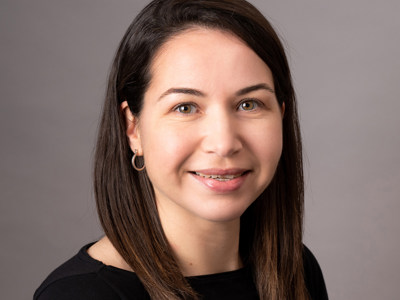
Yvonne Kestler
Yvonne Kestler is a senior associate solicitor in the human rights department.

Daniel Ryan, 50, died of pneumonia, alone in police cell with insufficient welfare checks
Daniel Ryan, aged 50, died in police custody at Southwick Police Station in Sunderland where a jury concluded that medical care was not obtained due to insufficient welfare checks.

Inquest into the death of 40-year-old Gareth Evans finds gambling caused him to take his own life
An inquest into the death of 40-year-old Gareth Evans from Surrey has found that a Gambling Disorder contributed to his death by suicide. Gareth died at his flat in Croydon in early November 2021, having left a note to his family indicating that he had taken his own life due to gambling.