

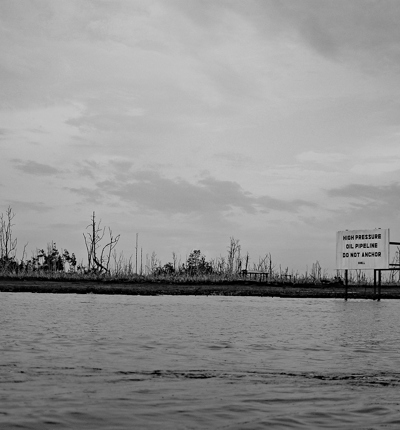
High Court gives permission for trial of claims Shell’s witnesses knowingly sought to mislead court in Nigeria oil pollution case
The High Court has ruled that allegations witnesses who testified for oil giant Shell about oil spills in Nigeria sought to mislead the court will be heard at an upcoming trial. The judgment follows a series of hearings in July 2026.
Posted on 10 September 2026
The witness evidence in question was given during jurisdiction proceedings from 2016 to 2021 in a long-running legal case being brought by two Nigerian communities who claim their land has been devastated by oil pollution caused by Shell. The allegedly misleading evidence was put forward at the High Court, the Court of Appeal and the Supreme Court during this five-year period.
At the time, Shell was seeking to have the case thrown out of the English courts, arguing it could only be heard in Nigeria on the basis that their witnesses proved Shell Nigeria was wholly autonomous from Shell plc., which is headquartered in London. The Supreme Court unanimously rejected Shell’s arguments in 2021 and a full trial of the overall case is now scheduled to begin at the High Court in May 2027.
The two communities, located in the Niger Delta, are seeking aggravated damages on the basis that Shell allegedly knowingly relied upon false and/or misleading factual assertions from its witnesses with the intention of preventing the claims from progressing.
Lawyers for Shell argued that the issue of their witness evidence should be examined at a separate hearing after the main trial if the claimants were successful. The High Court rejected their argument, holding that the issue should be dealt with now as it is potentially relevant to the credibility of the witnesses Shell was calling for that trial.
The claimants contend that Shell has now lost legal professional privilege over its communications with internal and external lawyers in relation to the evidence in question because of its alleged improper actions. A separate hearing is now likely to take place ahead of the main trial to determine whether Shell’s witnesses did knowingly give allegedly false evidence and whether the privileged legal communications must be disclosed.
At the hearings in July 2026, Shell also challenged various aspects of the claimants’ updated pleadings, which set out in detail the factual and legal basis for Shell’s responsibility for the oil pollution in Bille.
The High Court confirmed that the Bille community is entitled to argue that Shell is responsible for all the oil pollution there, even if residents cannot precisely identify each and every individual spill resulting in the pollution.
The judgment also made it clear that these are not “all or nothing” claims or “global claims”. This decision will have implications for other environmental claims where it is difficult to identify every specific polluting event that results in damage. The High Court endorsed the approach of the claimants in these proceedings which Shell has sought to attack.
Leigh Day international partner Matthew Renshaw said:
“Shell’s attempts to frustrate the progress of these claims has now reached a dead end and the case will now proceed to trial in full. Our clients are pleased that the High Court has recognised the importance of resolving whether Shell’s witnesses gave false and/or misleading evidence to the English Courts in an attempt to prevent their claims from proceeding.
“This judgment also sets an important precedent for other environmental cases involving multiple polluting events. It confirms that claimants can apply a common-sense approach about the harm caused by a polluter without needing to identify each and every incident of pollution and link that to a specific harm.”

Matthew Renshaw
Matthew Renshaw is a partner in the international department.

Daniel Leader
International human rights, business human rights and corporate accountability lawyer
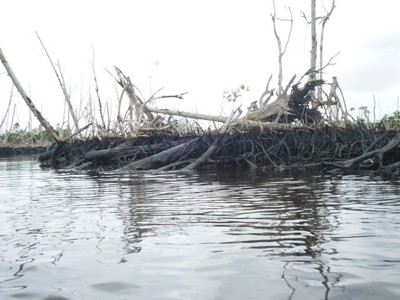
UN human rights experts say sell-off of Nigerian assets by Shell and other oil giants may have breached human rights laws
A group of United Nations human rights experts has written to four of the world’s biggest oil companies, including UK-based Shell, saying their recent sell-off of operations in Nigeria may have breached international human rights laws.