

Zambia’s toxic spill: settlement agreements in the aftermath of environmental disasters
Leigh Day solicitor Walker Syachalinga examines the use of settlement agreements following a major toxic spill at a Zambian mine and the implications they may have for access to justice for affected communities.
Posted on 12 June 2026
In the second blog of this series, Walker of Leigh Day’s international and group litigation department explores the legal issues arising out of such agreements in the aftermath of environmental disasters, and circumstances in which affected individuals may apply to set them aside.
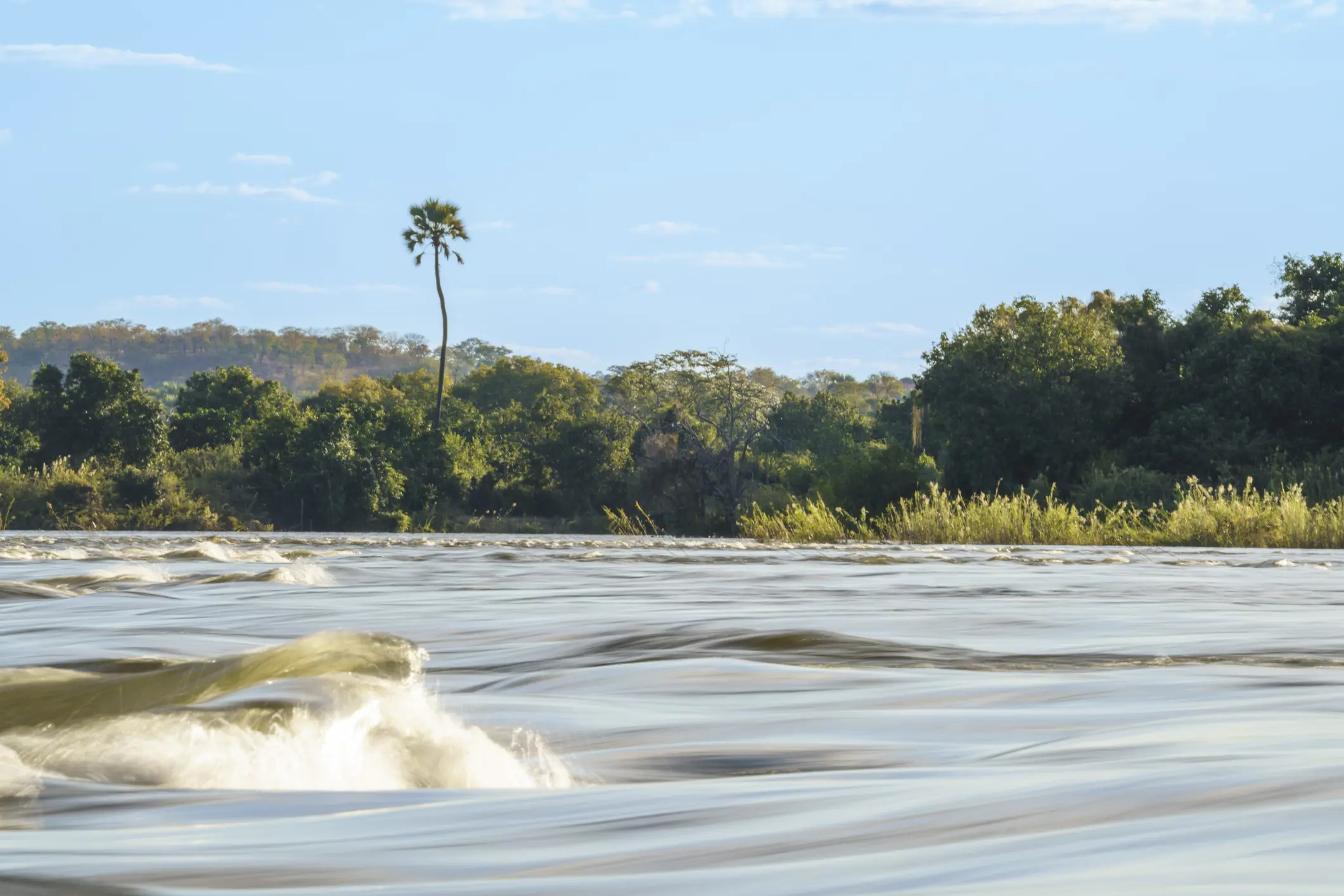
On 18 February 2025, multiple tailings dams operated by Sino Metals Leach Zambia Ltd collapsed, releasing what is now said to be up to 900,000 million litres of toxic effluent into the Chambishi Stream, Mwambashi River and Kafue River system.
In Part One of this series, I explained how mixed messaging about the true impact of the spill created an additional barrier to justice for affected communities. Here, I turn to a different but related obstacle: the settlement agreements signed by some affected community members in the immediate aftermath of the disaster.
The Supreme Court hearing on 3 June 2026
On 3 June 2026, Zambia’s Supreme Court heard an appeal by Sino Metals Leach Zambia Ltd, the operator of the mine from which the toxic spill emerged, against a High Court ruling that cleared the way for 176 community members to proceed with environmental and constitutional claims.
The Supreme Court directed that the Government of Zambia be joined to the proceedings as a party before the appeal could be heard, as custodian of the public interest and because the issues raised extend beyond the parties directly involved. Significantly, the court observed that environmental harm often has long-term consequences and that the full effects of such harm may not become apparent until a decade or more after the event.
That observation has direct relevance to the settlement agreements signed by 27 of the petitioners in July 2025. According to the Wall Street Journal, those individuals were required to accept payments ranging from as little as $100, on condition they agreed “never to talk about the spill, take legal action against Sino Metals or even reveal the contents of the nondisclosure agreement itself”, and were not shown the amount they would receive until after they had signed.
The extent to which similar agreements were used across the affected community remains unclear. The Wall Street Journal also reports that some agreements were signed in the presence of police.
A familiar pattern
The use of settlement agreements by companies accused of environmental damage is not unique to Zambia or Chinese companies. Following the 2015 collapse of the Fundão Dam in Brazil, compensation schemes were established through which 200,000 victims received payments in exchange for signing settlement agreements releasing their claims.
BHP later argued that claimants who had received compensation through the schemes were barred by the release provisions in their settlement agreements from pursuing claims in the English proceedings. The court undertook a detailed examination of applicable Brazilian legal principles and concluded that settlement agreements, like any contract, are subject to challenge as to their validity.
The common law approach
Settlement agreements are essentially contracts between two parties and therefore largely protected under the principle of freedom of contract. However, English common law under the doctrine of unconscionable bargains may set aside a settlement agreement with a ‘poor and ignorant person’ who had received no independent advice. This is in situations where the contract is oppressive, one of the parties has a weak bargaining position and the stronger party acted unconscionably by knowingly taking advantage of the weak party. It appears all three factors may be present in the case of community members who signed agreements with Sino Metals.
On oppressiveness, the payments offered in exchange for permanent and wide-reaching restrictions seem to bear no relationship to the alleged scale of the damage now acknowledged to be among the worst in Zambia's history. That is exacerbated by the acknowledgement that the true scale of the damage may not become fully known for decades. According to the Wall Street Journal, a victim whose half-acre farm was contaminated with the toxic spill reported that she was compensated a one-off $150 and some food parcels despite being told her farm would not sustain crops for at least another three years.
On bargaining weakness, the traditional requirement that a claimant be “poor and ignorant” has been interpreted to include “poverty or need of any kind, sickness, age, sex, infirmity of body or mind, drunkenness, illiteracy or lack of education, lack of assistance or explanation where assistance or explanation is necessary”. According to the Wall Street Journal, company officials accompanied by police put a contract in front of an 80-year-old and asked her to sign away the right to sue in respect of 50 acres of farming land.
On unconscionable conduct, the position under English law is that where a party to a settlement agreement knew that the other party had a claim and knew that the other party was not aware of the full nature or extent of that claim, relying on the release may amount to unconscionable conduct. Similarly, undue influence or some other form of victimisation may constitute unconscionable conduct. The Wall Street Journal reports that a local environmental activist who had sought to assist the community with access to independent legal advice was locked up overnight in police cells and fined, and that community members presented with settlement agreements were prevented from speaking to activists, legal representatives or journalists.
Zambian courts are not bound by English or other Commonwealth decisions. However, those that form part of the common law apply in Zambia under the English Law (Extent of Application) Act (Chapter 11).
Conclusion
What the above appears to demonstrate is that settlement agreements signed in desperate circumstances in the wake of an environmental disaster are emerging as a serious obstacle to access to justice for affected communities. That is because, in the immediate aftermath of a disaster, victims rarely have access to legal advice or expert evidence and cannot appreciate the long-term impact on their health and livelihoods. In the years-long litigation that follows, large numbers of people are effectively silenced, undermining the ability to hold liable parties to account for the true scale of harm.
While Leigh Day is not acting for any of the communities affected by this spill, we continue to support other Zambian communities affected by the environmental and human rights impact of major mining operations.
On 20 June 2026, Channel 4 will broadcast ‘Jon Snow: A Last Big Story’, a feature-length documentary in which the veteran broadcaster and his wife Dr Precious Lunga chronicle his battle with Alzheimer’s as they investigate the Sino Metals toxic waste spill in Chambishi, Zambia, and its impact on affected communities – a story Jon describes as one of the worst mining and ecological disasters of modern times.
Related Content

Walker Syachalinga
Walker is an associate solicitor in the international and group litigation department
Understanding the impact of Zambia’s toxic spill on local communities
Following a toxic waste spill in Zambia, Walker Syachalinga from Leigh Day’s international and group litigation team considers how mixed messaging from authorities creates an additional barrier to justice for communities impacted.
Communities living near Zambian copper mines take legal action against mining giant First Quantum Minerals over alleged involuntary resettlement of thousands of people
Villagers from farming and fishing communities in Zambia are taking legal action against Canadian mining company First Quantum Minerals (FQM) claiming the company effectively forced them to leave their villages and resettle in areas where they face severe hardship and poverty.